Evidence-based placemaking
From Urban Vision to Landscape Detail
Urban Regeneration | Design Process | Tree Strategy | Spatial Testing | Public Realm Design
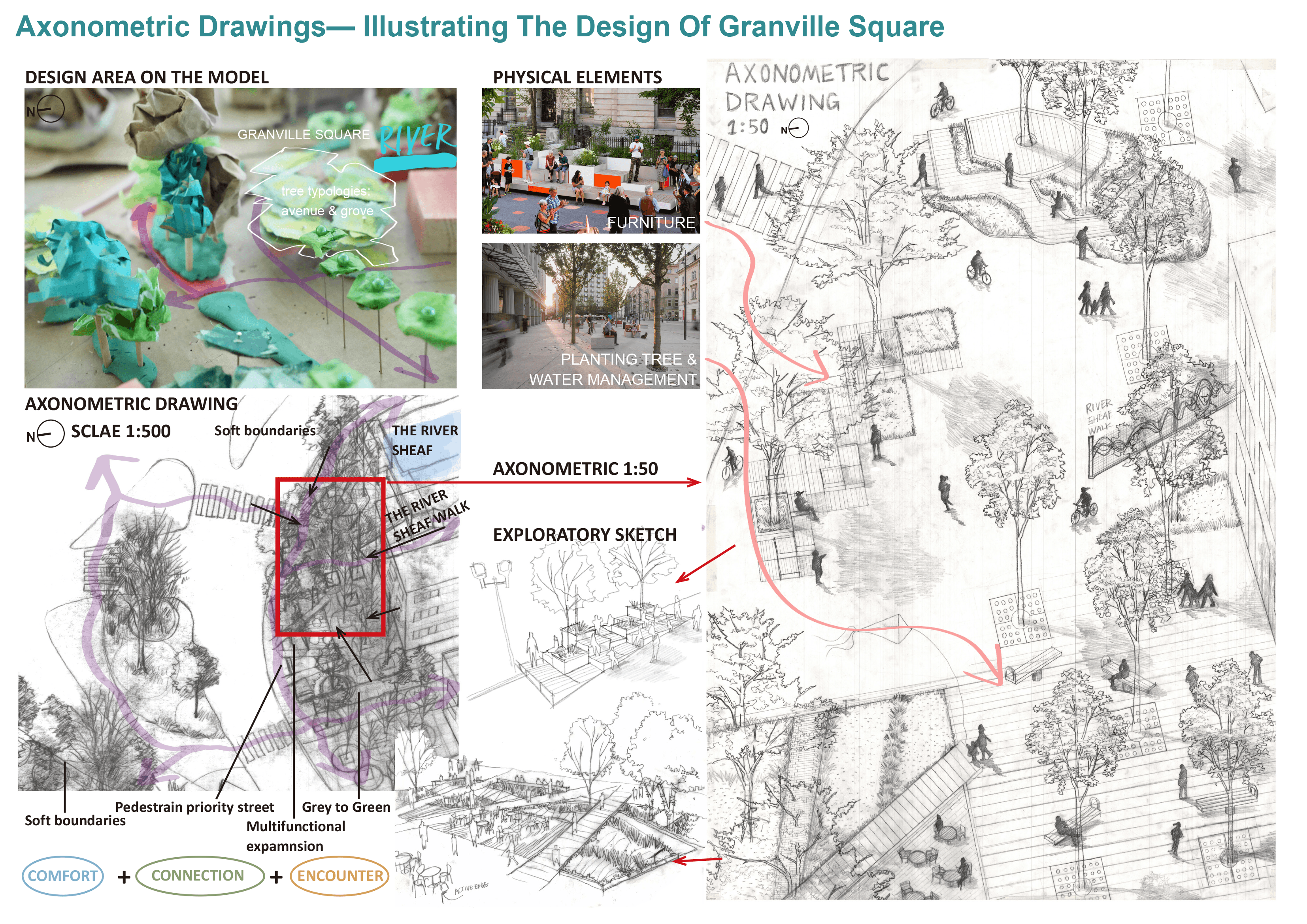
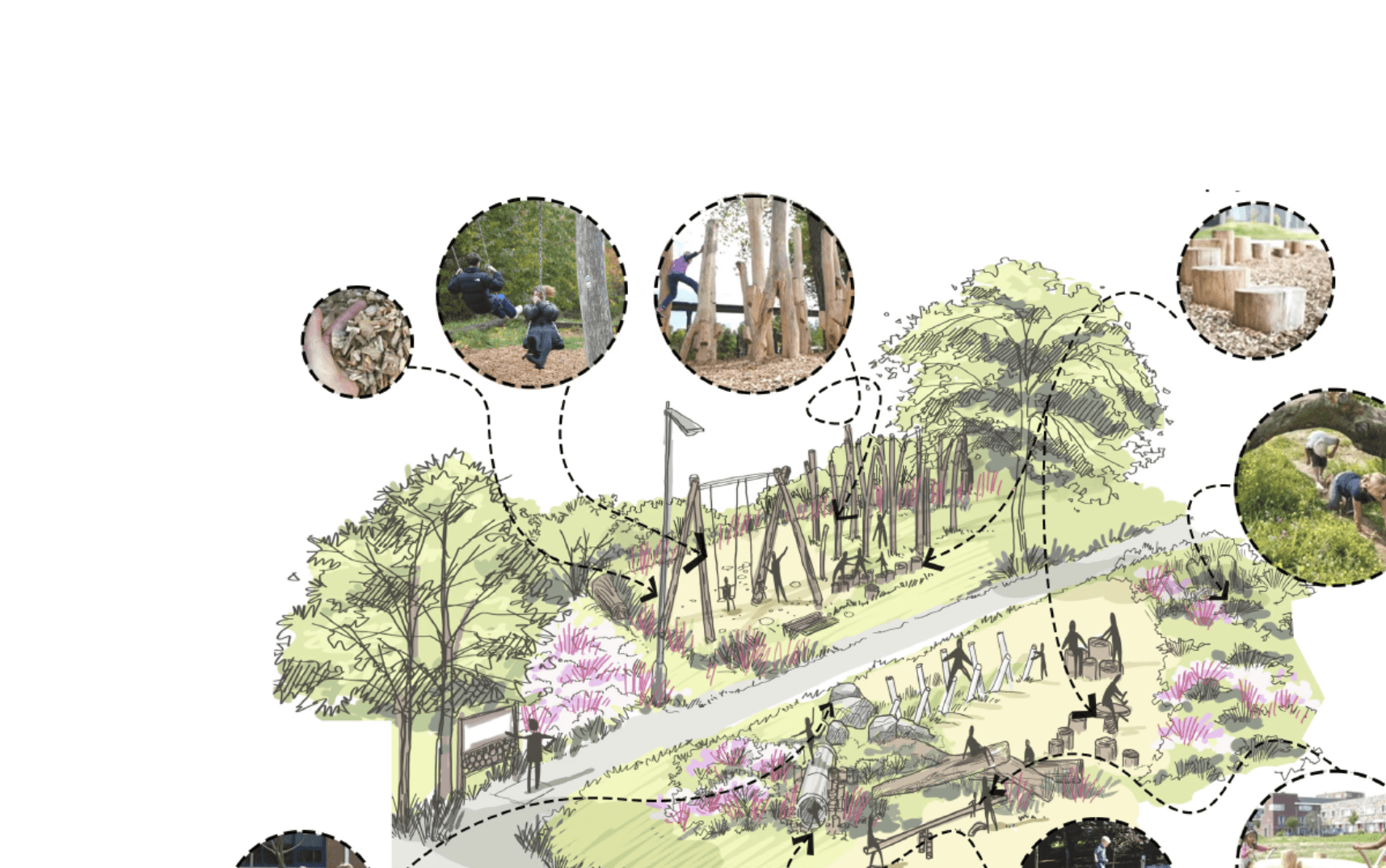
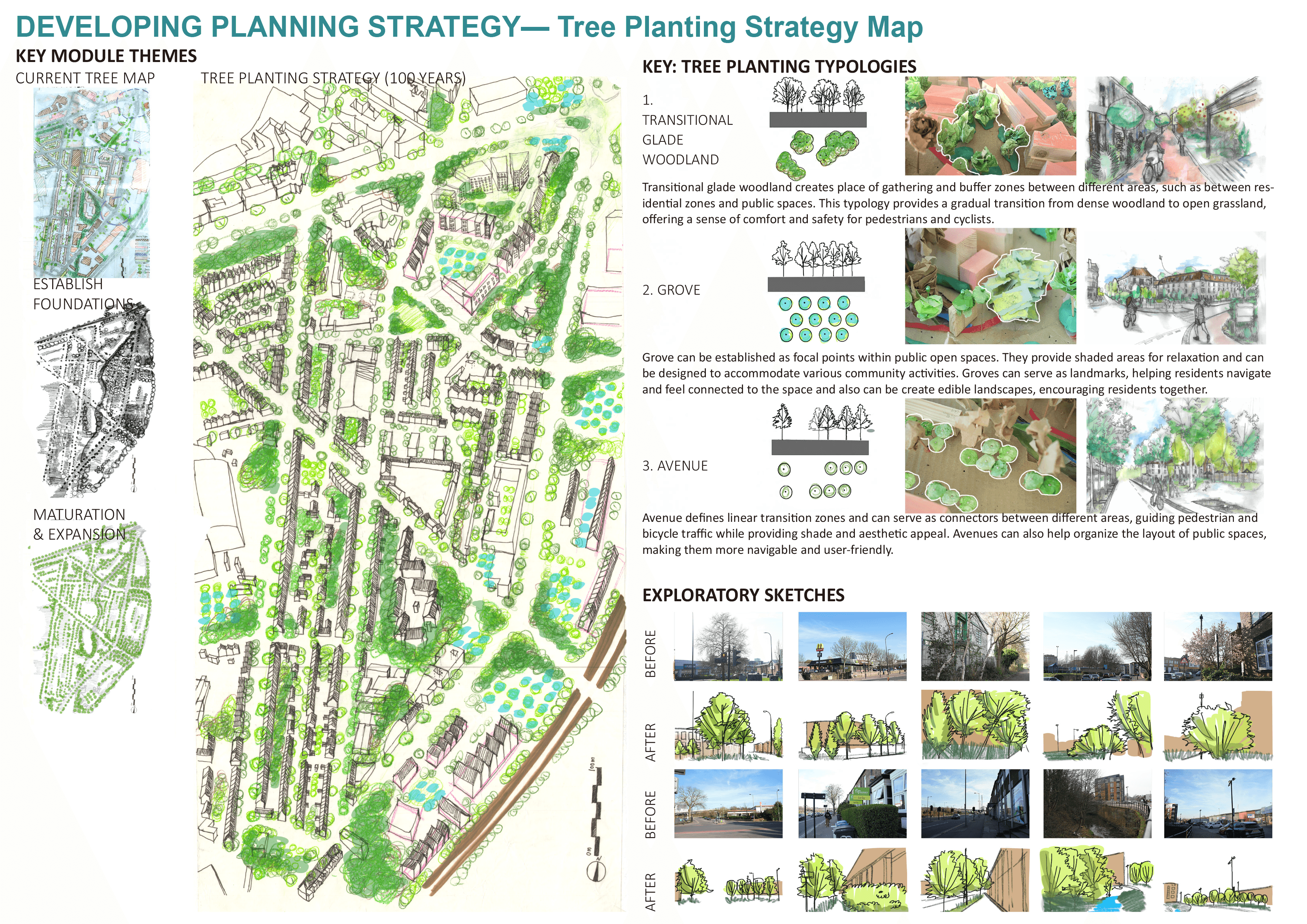
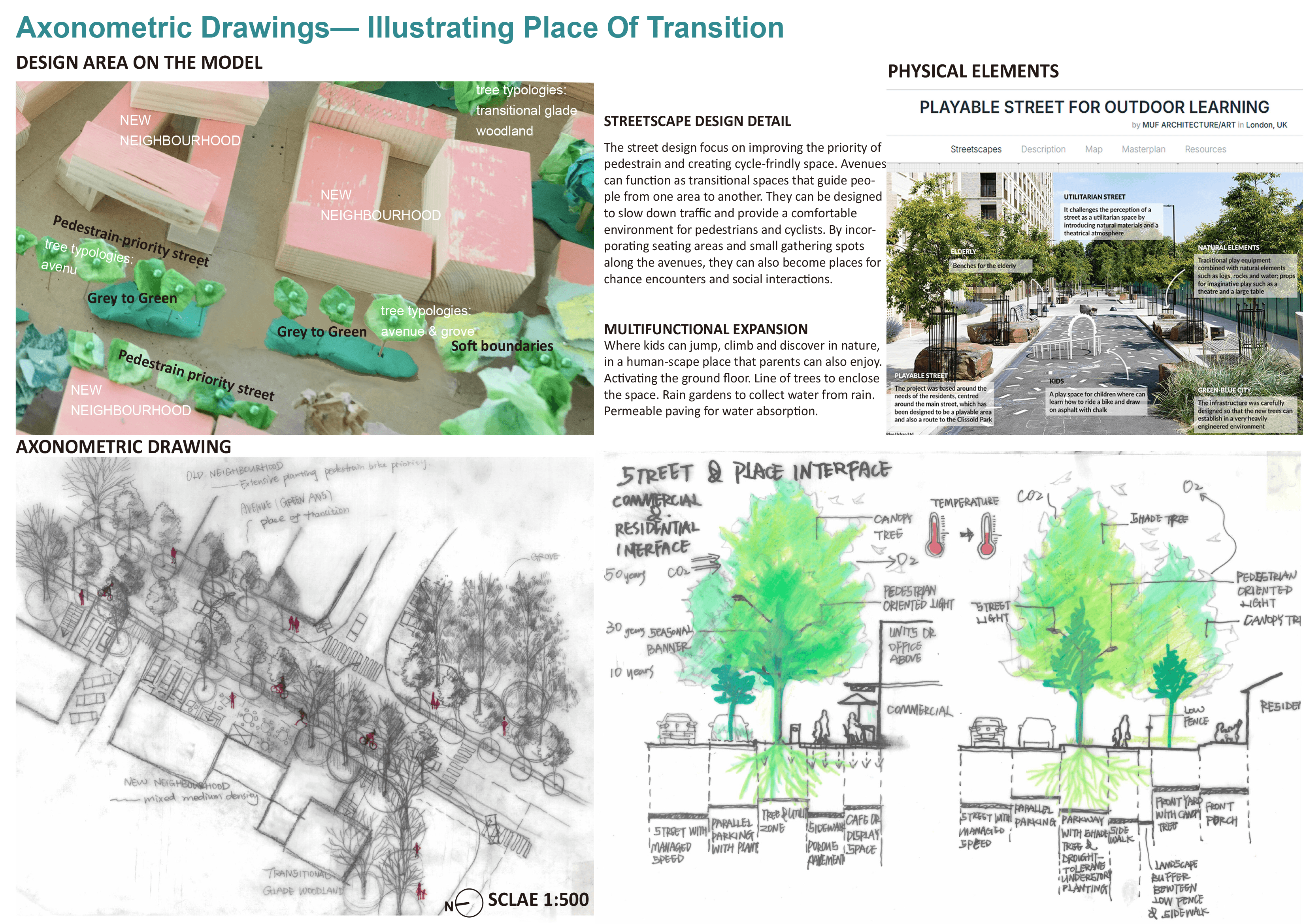
Rather than treating planting as a finishing element, the proposal positions landscape as the organising structure of the neighbourhood. Tree strategy, public realm improvements and active travel routes are integrated to strengthen ecological connectivity, improve walkability and create opportunities for everyday social interaction. The proposal combines strategic planning with detailed spatial design, including planting typologies, public gathering spaces, accessible routes and streetscape improvements. Particular attention is given to how landscape can support community wellbeing while addressing broader environmental challenges such as biodiversity loss, urban heat and surface water management.

challenge
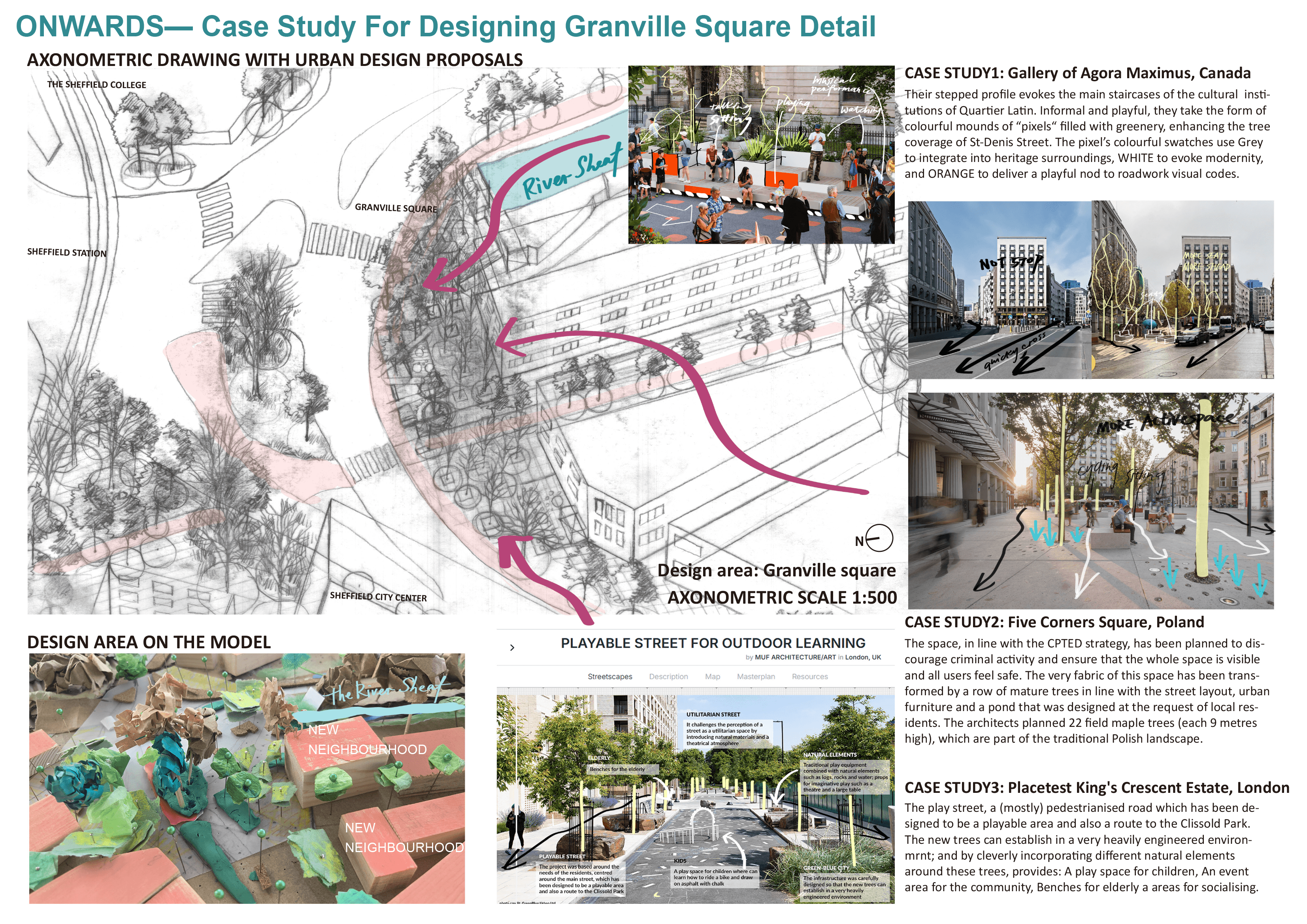
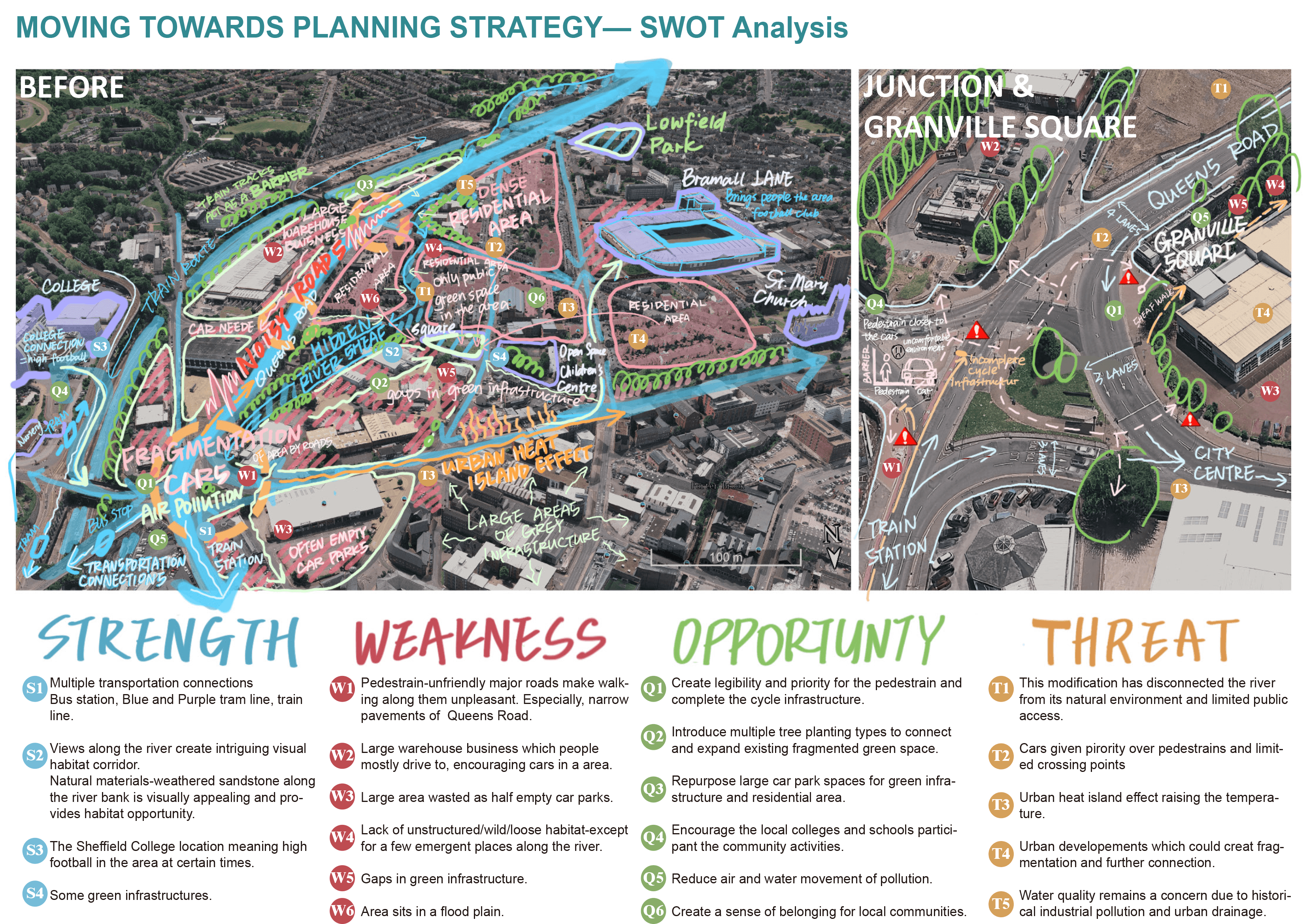
The project responds to a fragmented neighbourhood where disconnected public spaces, limited pedestrian activity and weak landscape identity reduced both environmental quality and community interaction. Initial site understanding was developed through field sketching, SWOT analysis and spatial observation to identify opportunities beyond conventional site surveys.


Vision & Testing
Rather than developing a fixed masterplan from the outset, I explored multiple design iterations through hand sketches and physical urban models. Working between city-scale planning and detailed landscape interventions allowed me to continuously test movement patterns, public space relationships and tree-led spatial structures. This iterative process strengthened my understanding of how strategic planning decisions influence the experience of individual streets and public spaces.


Achievement & Outcome
The final proposal establishes a connected public realm framework where planting, active travel and community spaces work together as one landscape system. More importantly, the project shaped my design methodology—learning to move confidently between urban strategy and detailed landscape design while using testing, feedback and iteration to inform design decisions rather than relying on intuition alone.
This project transformed the way I design—not by searching for a single solution, but by testing, refining and understanding how decisions made at the urban scale shape the experience of landscape at the human scale.