Design
How large does a place feel rather than simply measure?
Building the pocket park by hand helped me understand how people perceive enclosure, movement and proportion. Small changes in width, height and distance became much easier to evaluate through a physical model than on a drawing.
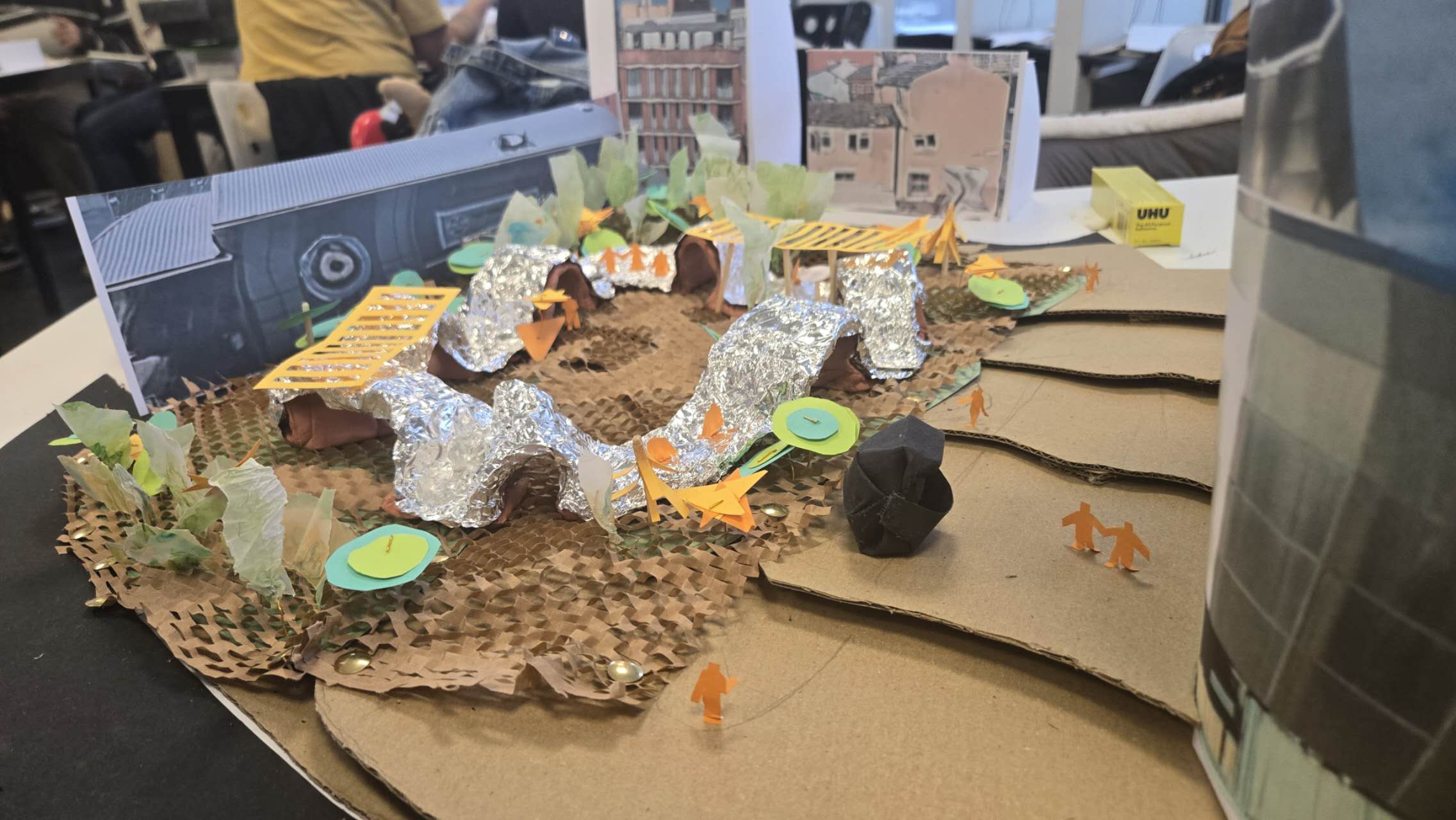
Making transformed dimensions into experience.

Understanding Topography
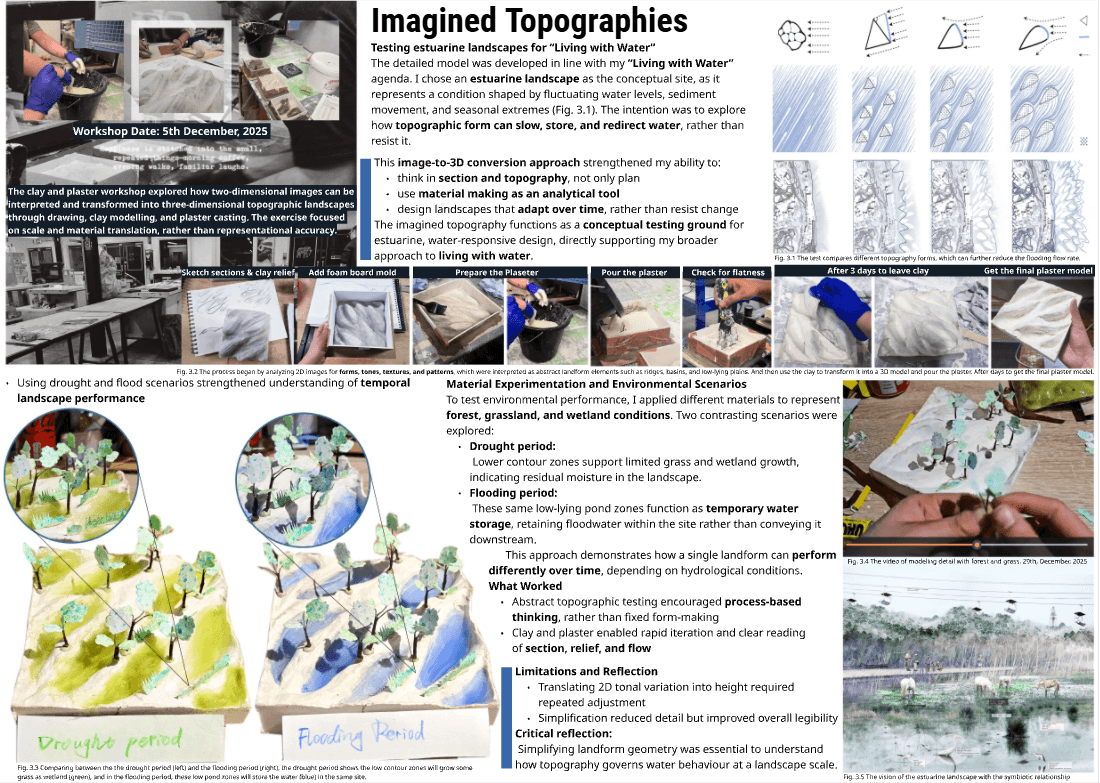
How does landform influence movement and ecological performance?
Shaping the terrain by hand revealed how subtle changes in contour influence circulation, drainage and visual relationships. Physical modelling allowed me to explore the landscape as a continuous three-dimensional system.

Contours became something I could feel, not only draw.


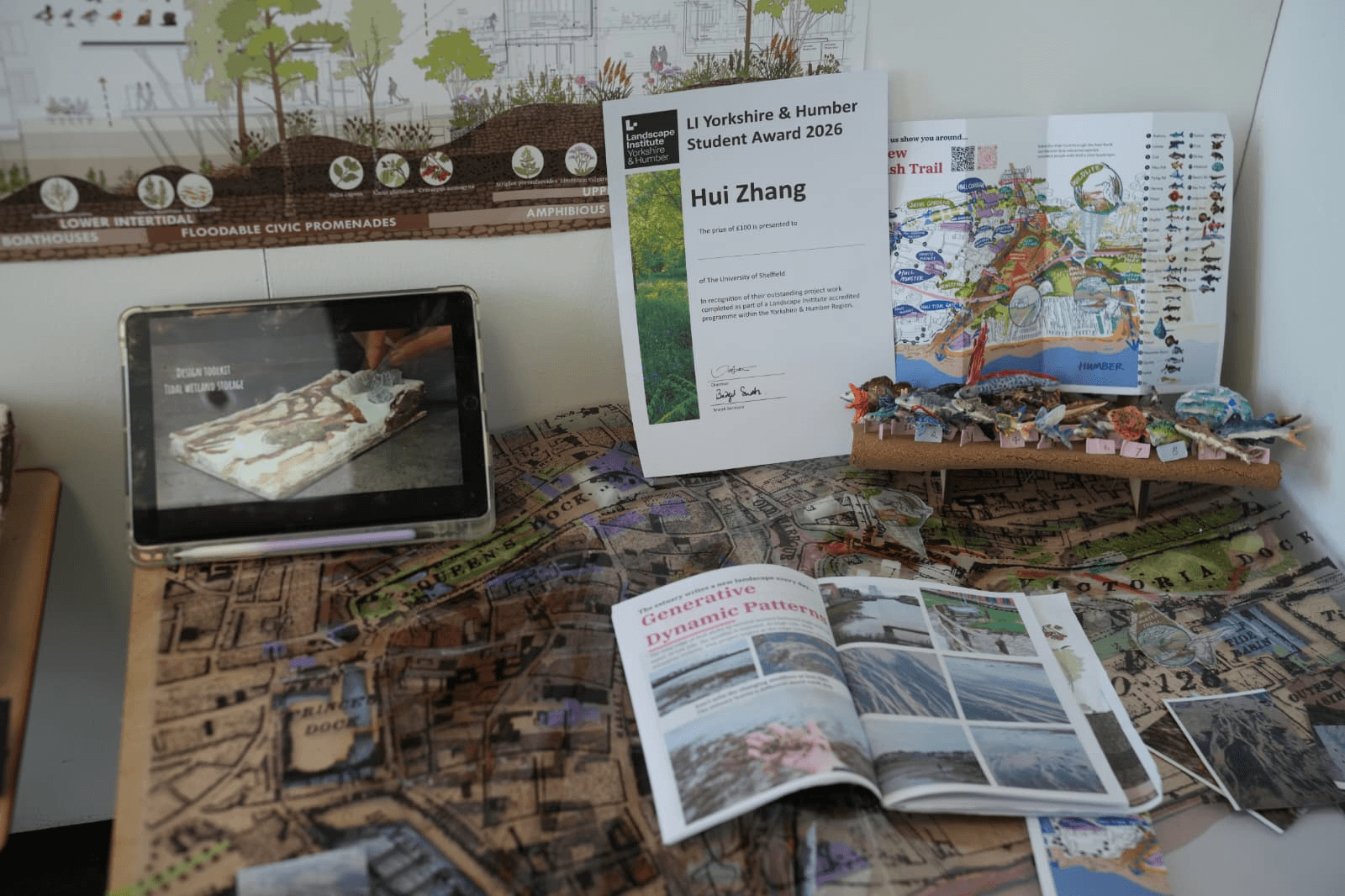
Understanding Systems
How do multiple landscape systems work together?
The modular models allowed me to test how ecological restoration, flood management and public programmes interact across different spatial scales. Rather than focusing on individual elements, I explored how the landscape performs as an integrated system.
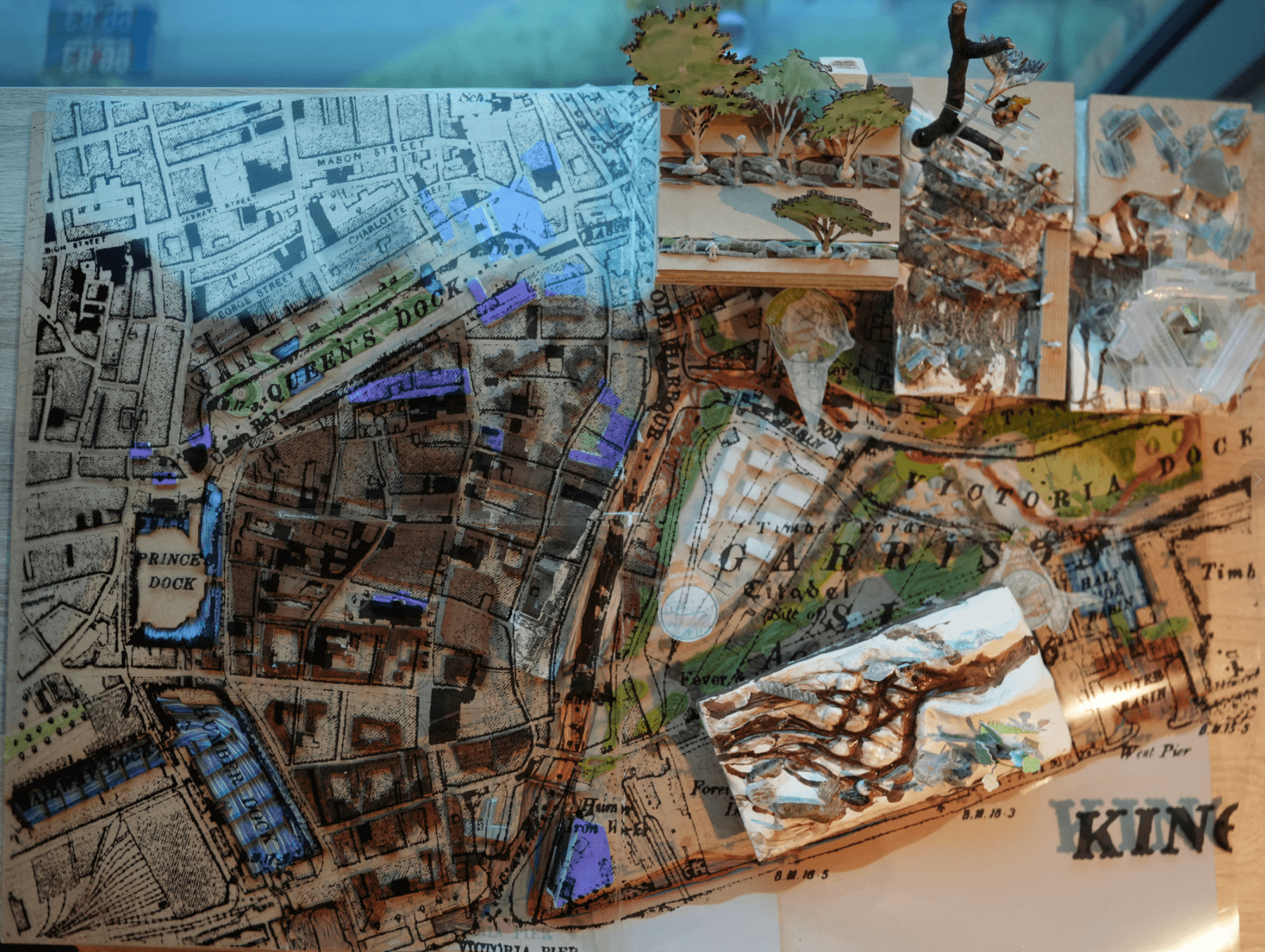
The model became a laboratory for testing landscape performance.

Understanding Identity
How can a small object communicate the identity of a place?
Designing and making the fish element helped me explore how heritage can be translated into an interactive landscape experience. Material, craftsmanship and storytelling became equally important as form.
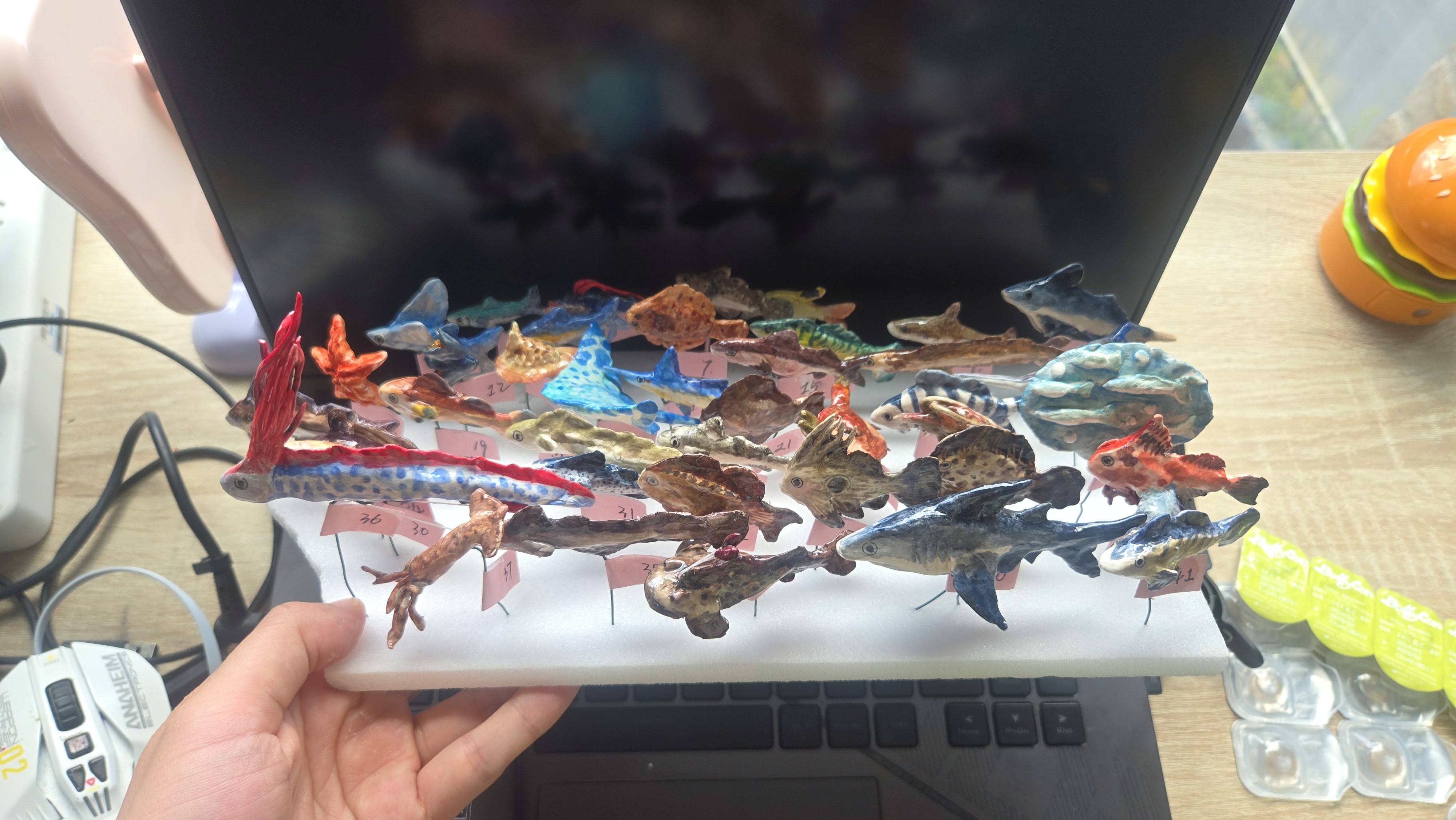
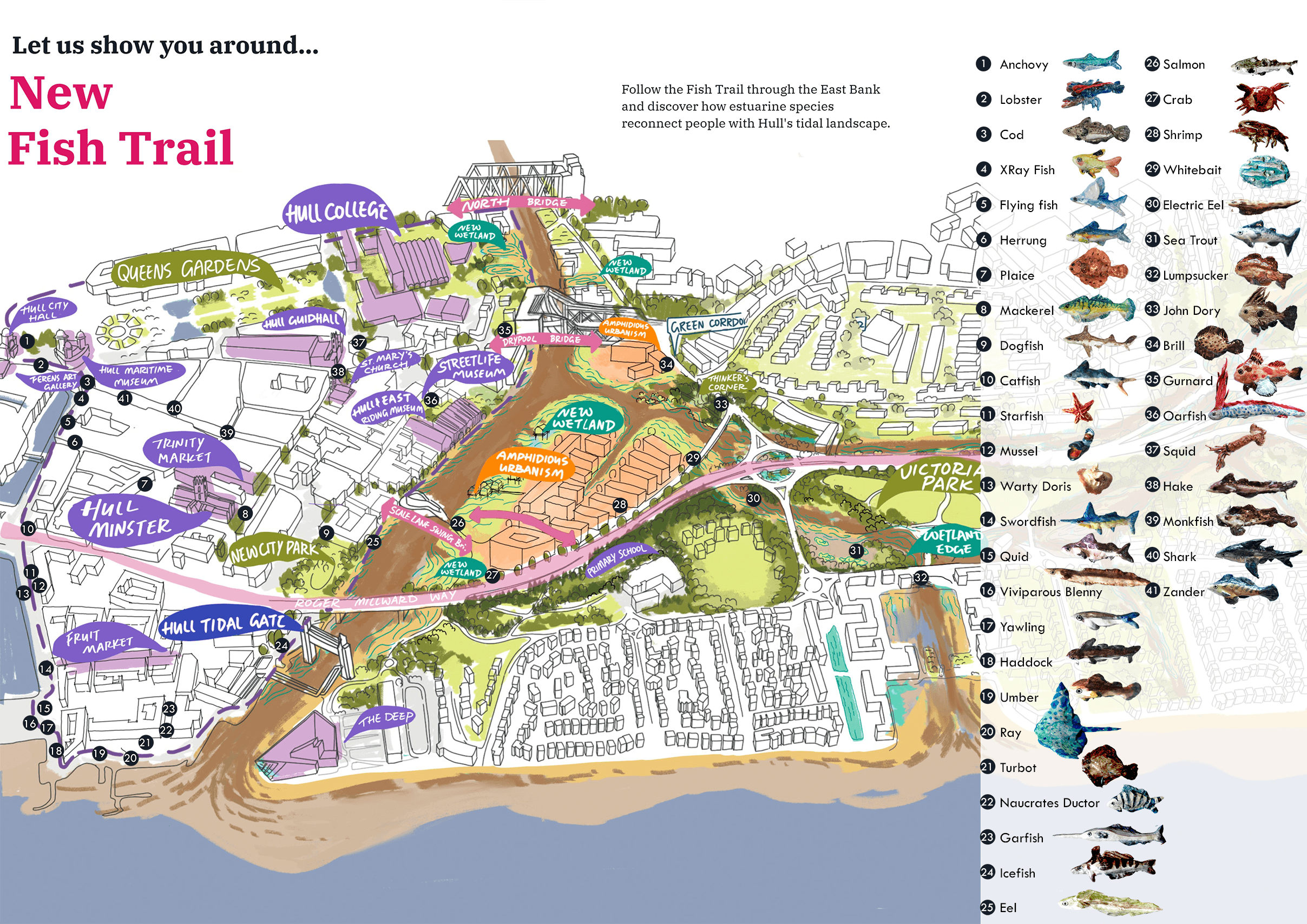
Identity is experienced through details as much as masterplans.
https://www.instagram.com/reel/DZdihJ3CoFl/?utm_source=ig_web_copy_link&igsh=MzRlODBiNWFlZA==